
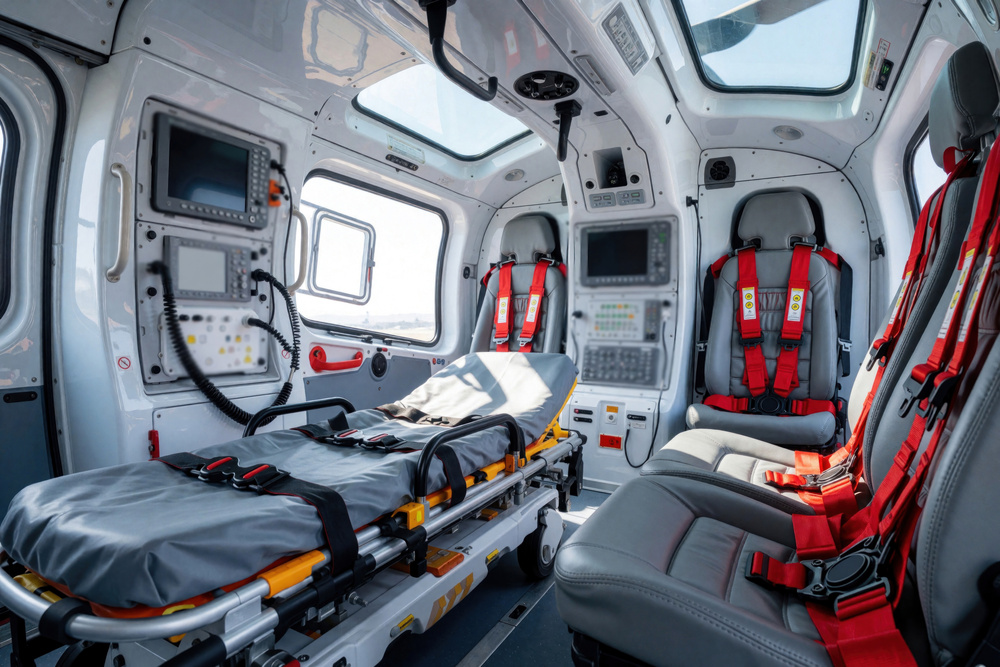
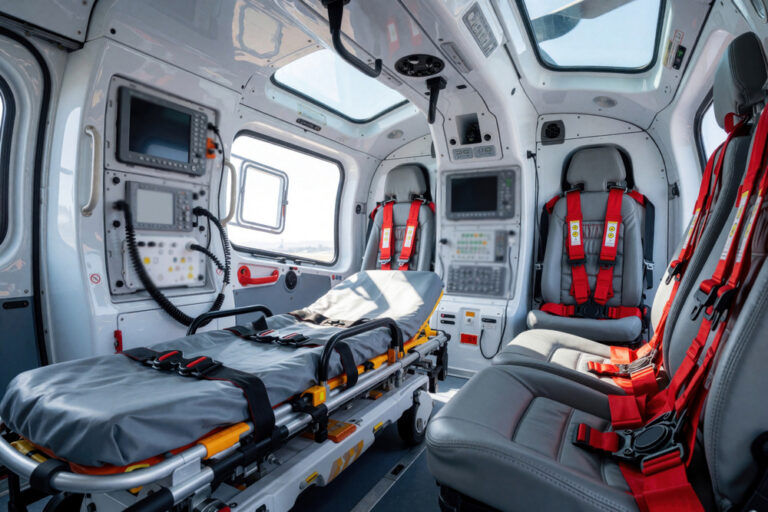
Once the air ambulance reaches the scene following a call to transport a patient with trauma, its mission doesn’t end there. Before the aircraft can accommodate the next patient, all equipment has to be taken out, the space thoroughly cleaned from floor to ceiling, and restocked. During a busy day, the procedure needs to be done four or five times. The more effective it is, the sooner the crew can begin operating. However, this part of their work is hardly considered when designing a cabin interior. Most of the time, the responsibility for cleaning falls to the crew, who manage it by using buckets of wipes on their own. Here is why it should be designed in advance.
Seams, Gaps, and Other Places Where Contamination Can Hide
Fluids within the body always find their way to those parts that are the hardest to reach. The flooring seams, gaps around cabinet doors, and sliding seat tracks become hotspots for contamination. Seat cushions made of fabric absorb the spills. Open screws and sharp edges collect dirt.
Read More: Pterygoid Implants: The Game-Changer for Complex Implant Cases
No matter how many minutes the crew spends on cleaning the cabin, it will never manage to do it thoroughly if the cabin interior hides places that are hard to reach. This is especially important because patients infected with MRSA or C. diff are routinely transported, and the subsequent patient might already be at risk.
Choice of Materials
The material should resist harsh disinfection procedures without cracking, fading or becoming sticky. Some plastics and coatings break down after months of hospital-grade disinfectants, leading to micro-cracks where bacteria and viruses can settle. Find out which disinfectants the materials were tested against by the manufacturer. Nonporous materials, seams sealed from both sides and seat cushions with wipeable covers make the cleaning process easier. It is worth noting that a floor going to the wall with a curve instead of a right angle contributes to the cleanliness of the cabin.
Designing for Cleanliness From Day One
According to the specialist team over at LifePort, one of the companies specializing in medical helicopters interiors, cleaning is much easier to solve on the drawing board than once the aircraft has started operating. Mounts that release without the need for tools enable crews to pull out a monitor or suction device for cleaning behind it. Stretchers with a smooth surface are simpler to clean than those with a rough surface. The location of the storage bins can be another important aspect. Storing the supplies in sealed compartments instead of on open shelves makes the cabin less exposed to contamination during messy missions.
Making Life Easier for the Crew
Usually, the flight nurse and paramedic clean the cabin themselves. Having worked a hard mission at night, the crew is often exhausted and distracted with thoughts about the next call. A cabin interior designed to help complete the job faster and more efficiently is advantageous when the crew is fatigued. The more crevices there are in the cabin, the easier it is to forget to clean them. A post-checklist can be helpful in this scenario, provided the cabin’s interior design permits it.
Conclusion
No one will ever choose a cabin interior based on its ease of cleaning. However, how easily the aircraft can be cleaned affects both the speed of getting it ready for the next mission and the safety of the following patient. Take into consideration the simplicity of cleaning while designing a new cabin or updating the existing structure. Then ask about it again when finalizing the design. The difference will be noticed by your crews on every shift.
Read More: Thermal Comfort: How Winter Innerwear Keeps You Healthy in the Cold





+ There are no comments
Add yours